Vol. 14 No. 2 (2026): Journal of Tourism, Sustainability and Well-being
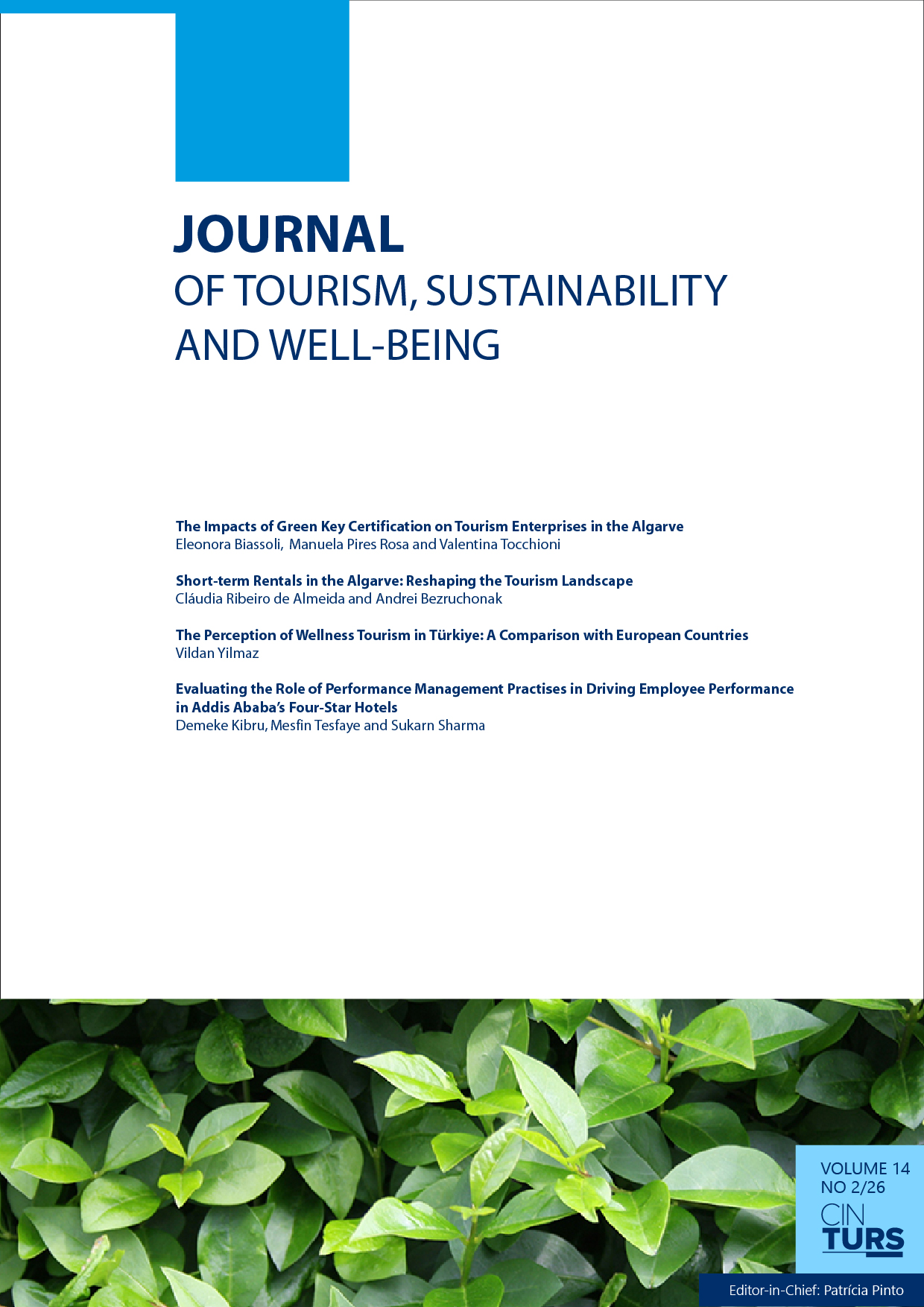
The second issue of JTSW in 2026 brings together four contributions that examine the evolving relationships between sustainability, tourism development, destination competitiveness, and organizational performance across diverse geographical contexts. The first article investigates the impacts of the Green Key certification in the Algarve, demonstrating how environmental certification can strengthen business competitiveness while fostering long-term commitments to sustainable tourism practices. The second study explores the rapid expansion of short-term rentals in the Algarve, revealing how their spatial concentration intensifies existing tourism and housing pressures, and highlighting the need for more integrated governance of accommodation, housing, and land-use policies. The third contribution shifts the focus to wellness tourism, comparing perceptions of Türkiye with established European destinations. It argues that developing a distinctive wellness identity grounded in cultural and historical assets represents a key pathway for strengthening destination competitiveness in an increasingly dynamic market. Finally, the fourth article examines the role of performance management practices in four-star hotels in a case study, showing that employee performance is enhanced through integrated systems that combine participatory planning, continuous feedback, and developmental corrective actions. In summary, these studies illustrate how sustainable tourism development depends not only on responsible destination management and strategic positioning but also on effective organizational practices that support long-term resilience and well-being across the tourism sector.